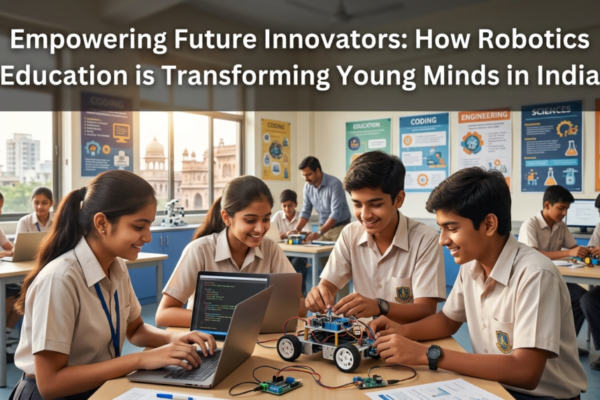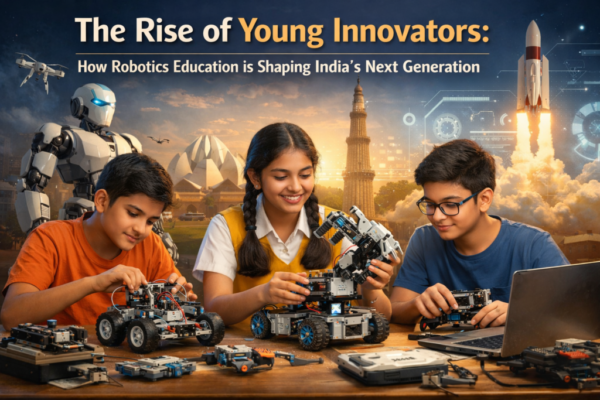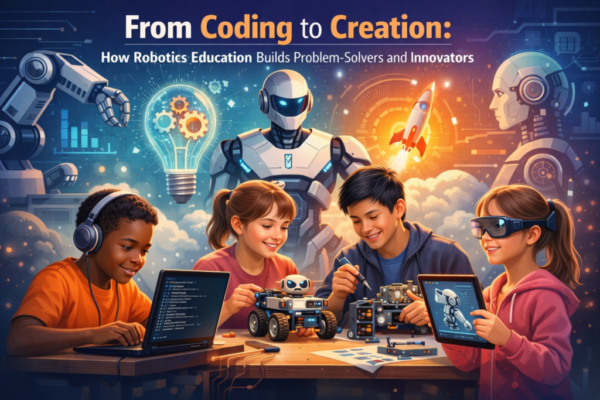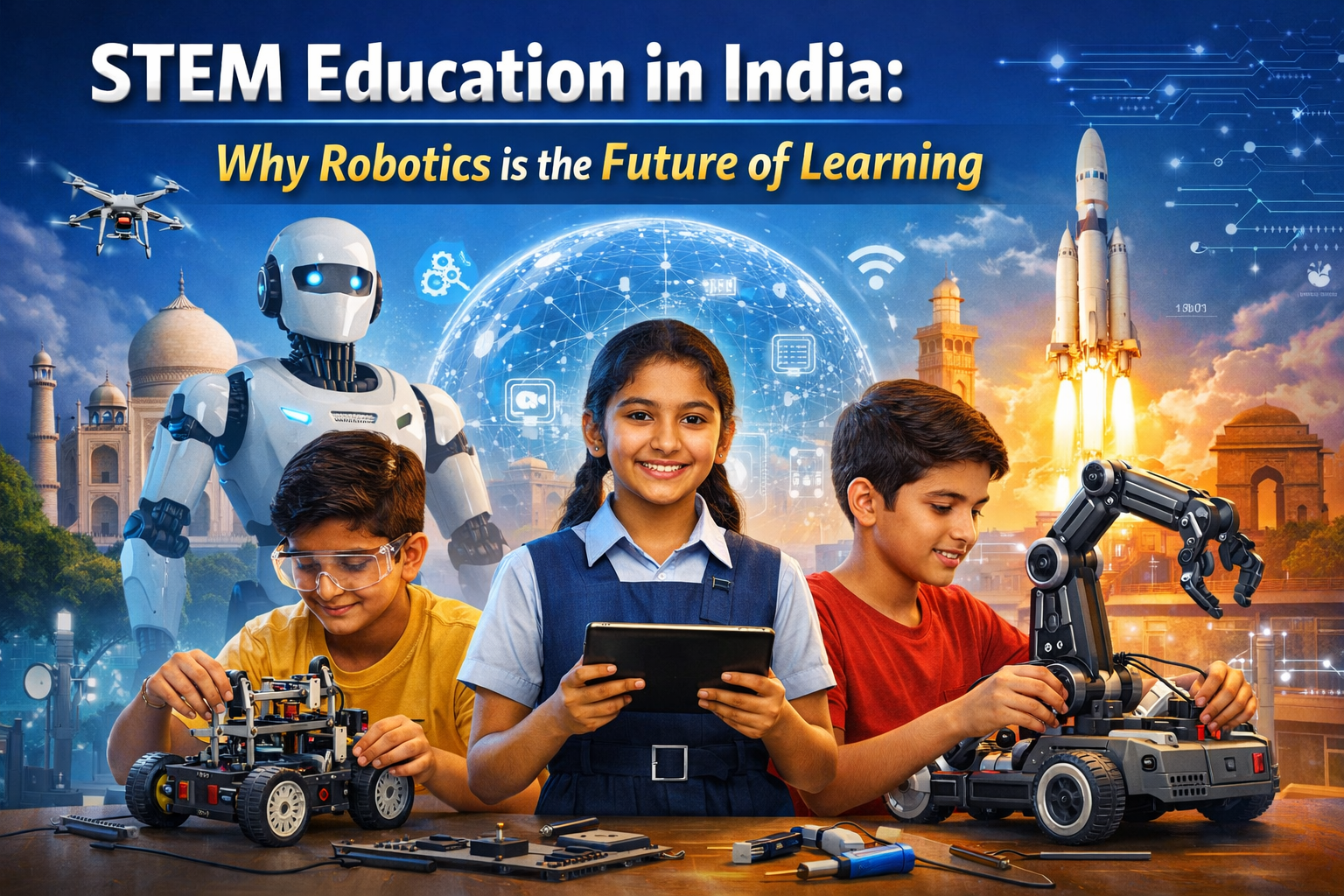
STEM education in India is rapidly transforming the way students learn, think, and prepare for the future. STEM stands for Science, Technology, Engineering, and Mathematics — the core skills required in today’s innovation-driven world. Among all STEM fields, robotics is emerging as one of the most powerful and future-ready learning domains for students in India.
With automation, artificial intelligence, and smart technologies shaping industries, learning robotics at an early stage helps students develop problem-solving skills, logical thinking, creativity, and technical knowledge. Robotics is no longer limited to engineering colleges — it is becoming essential for school students, beginners, and young innovators.
What is STEM Education?
STEM education is a practical, hands-on learning approach that integrates science, math, technology, and engineering concepts to solve real-world problems. Instead of memorizing theory, students build projects, experiment, and learn through experience.
In India, the National Education Policy (NEP) emphasizes skill-based learning, innovation, and technology integration — making robotics a key part of modern education.
Why Robotics is the Future of Learning in India
1. Encourages Practical Learning
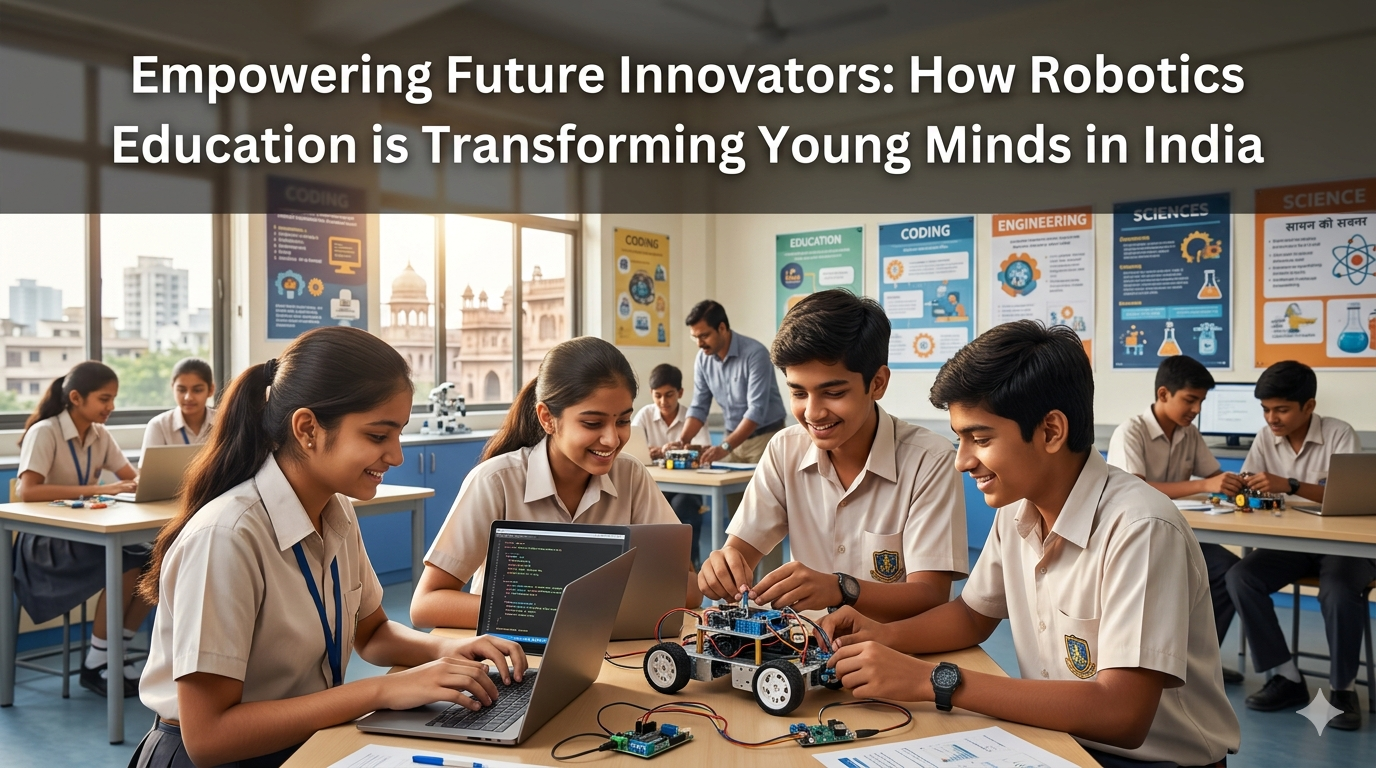
Robotics shifts education from textbook learning to hands-on experience. Students design, build, and program robots, which improves understanding and retention.
2. Builds Problem-Solving Skills
When students work on robotics projects, they learn to analyze problems, think critically, and create solutions — skills essential for future careers.
3. Prepares Students for Future Careers
Careers in robotics, AI, automation, machine learning, and data science are growing rapidly. Early exposure gives students a strong advantage.
4. Improves Creativity and Innovation
Robotics encourages students to experiment and invent. It helps develop an innovation mindset from a young age.
5. Boosts Confidence and Teamwork
Working on robotics projects builds communication skills, collaboration, and leadership qualities.
Importance of Robotics for School Students
Introducing robotics at school level helps students:
-
understand technology beyond smartphones and apps
-
develop coding and logical thinking skills
-
explore engineering concepts early
-
prepare for future competitive careers
Students who learn robotics gain practical exposure that traditional education often lacks.
Robotics + AI = Future Skills
Robotics combined with artificial intelligence is reshaping industries such as healthcare, agriculture, manufacturing, and space technology. Students who start learning robotics today will be future innovators, engineers, and tech leaders.
Benefits of Joining a Robotics Academy
A professional robotics training institute provides:
-
structured learning from basics to advanced
-
hands-on projects and real-time applications
-
expert mentors and live sessions
-
robotics kits for practice
-
career guidance in STEM fields
This environment helps students move from theory to real innovation.
Scope of Robotics in India
India is becoming a global technology hub. The demand for robotics engineers, AI specialists, and automation experts is increasing in sectors like:
-
manufacturing
-
healthcare
-
education
-
defense
-
space research
-
smart cities
Learning robotics today opens doors to global career opportunities tomorrow.
How Students Can Start Learning Robotics
Students can begin their robotics journey by:
-
joining a robotics academy
-
learning basic electronics and coding
-
working on small projects
-
participating in STEM competitions
-
attending workshops and online sessions
Starting early makes learning easier and more impactful.
Conclusion
STEM education is shaping the future of learning in India, and robotics is at the center of this transformation. It equips students with practical skills, future-ready knowledge, and innovative thinking needed in the digital era. As industries continue to adopt automation and AI, robotics education will play a major role in preparing the next generation.
Students who learn robotics today will become tomorrow’s innovators, engineers, and technology leaders.