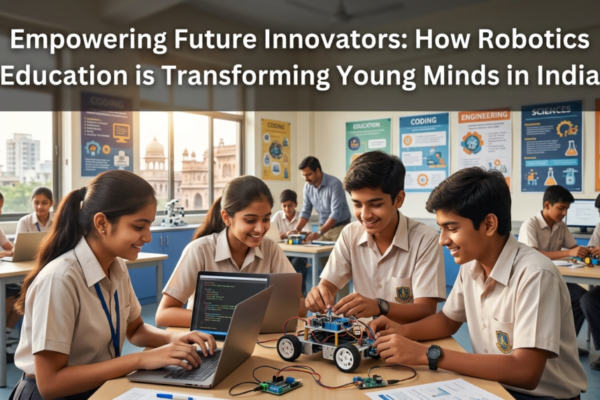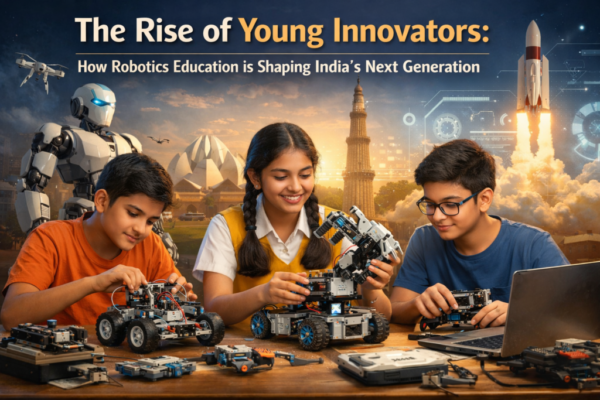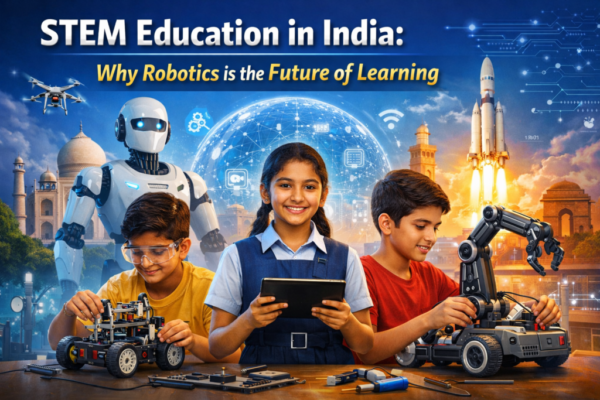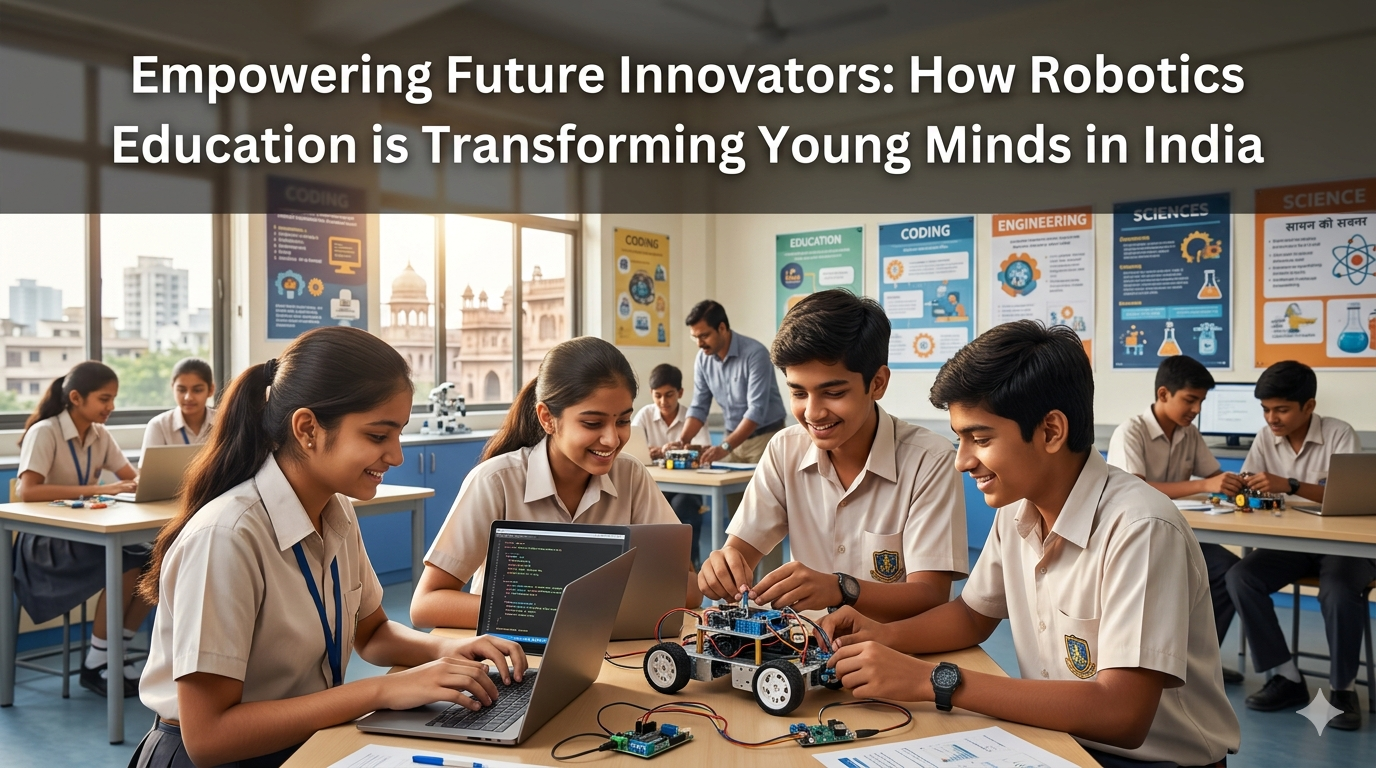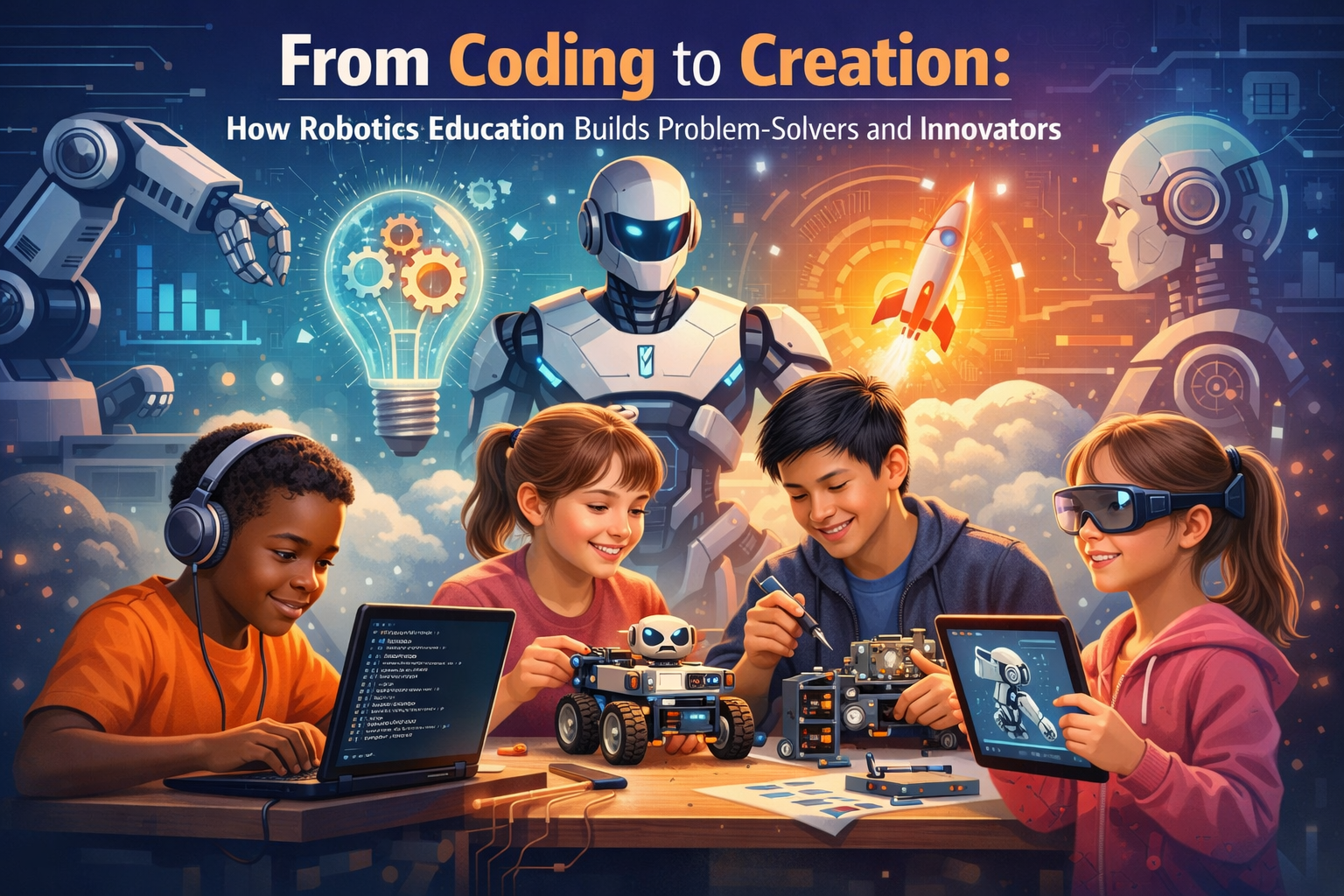
In today’s rapidly evolving world, education is no longer limited to textbooks and exams. The future belongs to thinkers, creators, and innovators — students who can solve real-world problems using logic, creativity, and technology. Robotics education plays a powerful role in shaping these future-ready minds by combining coding, engineering, and hands-on learning into one transformative experience.
The Shift from Passive Learning to Active Creation
Traditional education often focuses on memorization, while robotics encourages experimentation. Students don’t just learn concepts — they build, test, fail, and improve. This process transforms them from passive learners into active creators.
When a student builds a robot, they:
-
Understand how things work in real life
-
Apply classroom knowledge practically
-
Learn through trial and error
-
Develop confidence in solving problems
This “learning by doing” approach creates deeper understanding and long-term retention.
Coding + Creativity = Innovation
Coding is often seen as technical, but robotics makes it creative. Students write code to control movements, sensors, and actions — turning ideas into working machines.
Through robotics education, students learn:
-
Logical thinking and sequencing
-
Analytical decision-making
-
Creative design and innovation
-
Technology integration skills
Instead of just using technology, they start creating it.
Building Problem-Solvers for the Real World
Robotics training challenges students with real-life scenarios:
-
How to make a robot avoid obstacles
-
How to automate a task
-
How to improve efficiency
-
How to troubleshoot errors
Every challenge builds resilience and critical thinking. Students learn that failure is part of innovation — and each mistake brings them closer to a solution.
These experiences nurture:
-
Problem-solving mindset
-
Independent thinking
-
Team collaboration
-
Leadership skills
STEM Learning That Makes Sense
Robotics integrates STEM (Science, Technology, Engineering, Mathematics) in the most engaging way possible.
Instead of learning these subjects separately, students experience them together:
-
Science explains how sensors and energy work
-
Math helps in measurements and calculations
-
Engineering builds structure and mechanics
-
Technology powers automation and programming
This holistic learning approach prepares students for future careers in AI, robotics, and advanced technologies.
Preparing Students for Future Careers
The world is moving toward automation, artificial intelligence, and smart technologies. Robotics education prepares students early for these future industries by equipping them with essential skills like:
-
Computational thinking
-
Design thinking
-
Innovation mindset
-
Digital literacy
-
Technical confidence
Students exposed to robotics today become tomorrow’s engineers, innovators, and entrepreneurs.
Boosting Confidence and Creativity
One of the biggest impacts of robotics education is confidence. When students build something that works, they feel empowered. They begin to believe in their ideas and abilities.
They start asking:
-
“What else can I create?”
-
“Can I improve this design?”
-
“How can technology solve real problems?”
This curiosity leads to continuous learning and innovation.
Robotics Education in Schools: A Game Changer
Schools and academies introducing robotics are giving students a major advantage. It transforms classrooms into innovation labs and encourages experiential learning.
Students become:
-
More engaged
-
More curious
-
More future-ready
-
More solution-oriented
Robotics bridges the gap between theory and real-world application.